New Orleans, LA · Garage Door Service
Opener Repair for Terrytown's 1970s-Era Garages
Terrytown's garages date to the late 1970s building boom, and the chain-drive openers from that era fail in predictable ways. We travel from New Orleans to fix them.
- Repairs & new doors
- Springs & openers
- Serving 7 nearby communities
What the Fix Involves
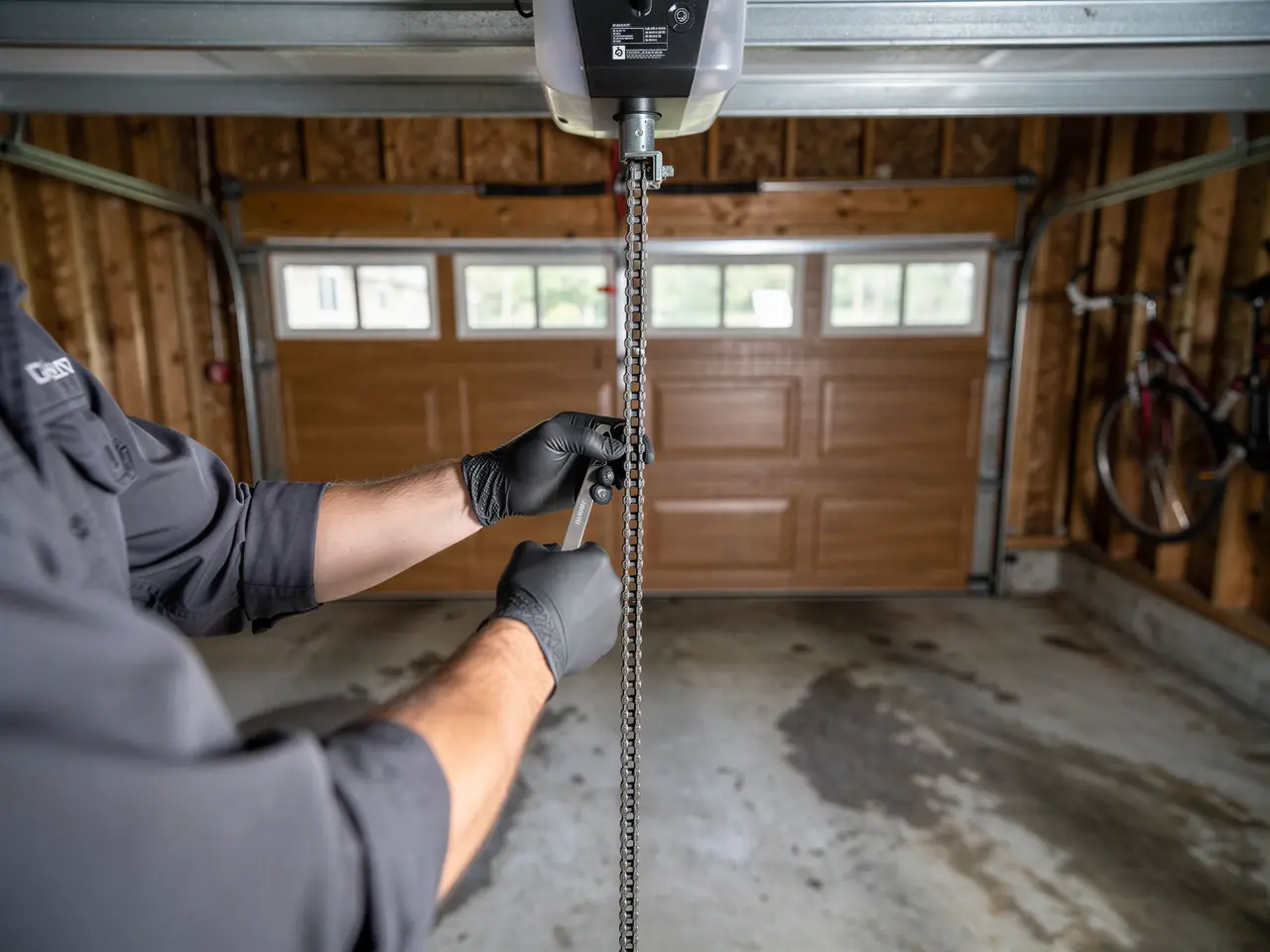
Terrytown's housing stock centers on 1977, which puts most garages here at the tail end of the chain-drive opener boom. These were single-car or modest double-car bays built with steel or wood-composite doors hung on standard torsion or extension springs, matched to openers that were new technology when the subdivision went up and are now pushing fifty years old if nobody ever swapped them. The fix, in most cases, isn't a new opener out of the box. It's figuring out whether the motor, the logic board, the drive gear, or the safety sensors are the actual problem, because a 1970s-build garage often has mismatched parts from two or three repair visits over the decades. We check the travel limits, the capacitor, the drive chain tension, and the sensor alignment before we touch anything else, since replacing a motor that was never the issue just adds another layer to a system that's already been patched more than once.
Some of these openers were installed after the original 1970s unit failed, which means you might have a 1990s or 2000s model doing the job today. That changes the repair, not the diagnosis. We still start at the same place: what's actually broken, not what's oldest.
The DIY Question
If your opener hums but the door doesn't move, that's usually the drive gear or the capacitor, and either one is a reasonable weekend fix if you're comfortable pulling the cover off the motor housing. If the door reverses right after it starts closing, check the safety sensors first; they're cheap, they're exposed, and on a garage this age they've often been knocked out of alignment by years of bikes, trash cans, and storage bins sliding past them.
What you shouldn't touch yourself: anything involving the spring under tension, or a logic board that's sparked or smells burnt. Terrytown's climate runs mild with occasional freeze risk, which isn't the main stress on these systems, but years of humidity do corrode contacts and connectors faster than a dry climate would. If you've opened the housing and found green or white corrosion on a wiring harness, that's a call, not a project.
Where This Job Goes Sideways
The most common misdiagnosis on a house built in this era is blaming the opener for a problem that's actually the door. A 1970s-era door that's sagged or racked slightly over the decades puts extra load on the opener's drive system, so the opener strains, trips its limit switch, or burns out a gear trying to lift a door that's no longer moving freely on its own track. Replace the opener in that case and you'll be back to the same complaint in a few months, just with new parts wearing out the same way.
The other way this goes sideways: universal remote kits and smart-home opener add-ons bought online don't always pair cleanly with the motor units still running in houses from this build period. We've seen owners spend money on a retrofit before anyone checked whether the base unit could even support it.
Why This Fails Locally
Terrytown's median household income sits at $56,944, and across the broader service area the median runs close to that at $58,255, which tends to mean owners hold onto a working opener longer than they'd replace it outright - repair over replacement is the default here, not the exception. That matters for parts: a chain-drive unit matched to 1970s hardware isn't always stocked the way a current model is, so diagnosing the right failure point the first time saves a second trip waiting on a part.
Across the wider area, most housing dates to the 1960s and 70s, built between 1958 and 1997 with a median of 1977, and Terrytown's own build year lines up almost exactly with that broader pattern. That consistency is useful: we see the same opener generations and the same failure points repeatedly, which is part of why diagnosis here tends to be fast even without a local parts depot.
How It Shows Up
The call usually starts one of two ways. Either the opener runs but the door won't lift - motor noise, no movement, sometimes a grinding sound from a stripped gear - or the door lifts partway and stops, which on a unit this old is almost always the travel limit switch drifting out of calibration from years of use. Less common but not rare: the remote stops working while the wall button still does, which points to the receiver board rather than anything mechanical.
Owners sometimes report the door reversing on its own mid-close. On a garage built in the late 1970s, that's rarely a software issue since these units predate modern safety sensor standards by decades; it's almost always a physical obstruction in the sensor path or a sensor that's drifted out of alignment.
How Long You Are Without the Door
We travel from New Orleans, about 12 miles to Terrytown, so the opener itself doesn't sit idle waiting on a technician based locally - there's no depot here, just the drive time built into scheduling. Once we're on site, most opener repairs on a system this age - gear replacement, sensor realignment, capacitor swap - are same-visit work. The exception is a logic board or motor that needs an exact replacement part for an older unit; those can take longer to source than a current-model opener would, and we'll tell you up front if that's the situation rather than promise a timeline we can't back up.
Frequently asked questions
Is my opener too old to repair, or do I need a full replacement?
Depends on what's failed. A stripped drive gear, bad capacitor, or misaligned sensor is a straightforward repair regardless of the opener's age. We only recommend replacement when the motor itself has burned out or the logic board is fried, since sourcing an exact match for some older units can take longer than installing a new one.
Why does my garage door reverse by itself right after it starts closing?
On most houses in this area, that's the safety sensors near the floor, either blocked by something in the path or knocked out of alignment. It's rarely the opener's logic. We check sensor alignment before anything else because it's the cheapest fix and the most common cause.
Do you have a local office in Terrytown?
No. We're based in New Orleans and travel to Terrytown, about 12 miles out, for every job. There's no local depot, so parts that need special ordering add to the timeline rather than being pulled from stock around the corner.
Can I just add a smart-home kit to my old opener instead of replacing it?
Sometimes, but not always. Retrofit kits don't pair cleanly with every motor unit from the chain-drive era, and we've seen owners buy a kit before checking compatibility. We check the base unit first so you're not paying for hardware it can't actually use.
Book garage door service in New Orleans
Call now or request a quote - tell us what the door is doing and where you are.