
New Orleans, LA · Garage Door Service
Cable Repair for Terrytown's 1970s-Era Garage Doors
Terrytown's housing dates to around 1977, which means original-spec cable drums and single-cable setups. Here's what that means for a cable repair call from New Orleans.
- Repairs & new doors
- Springs & openers
- Serving 7 nearby communities
What the Fix Involves
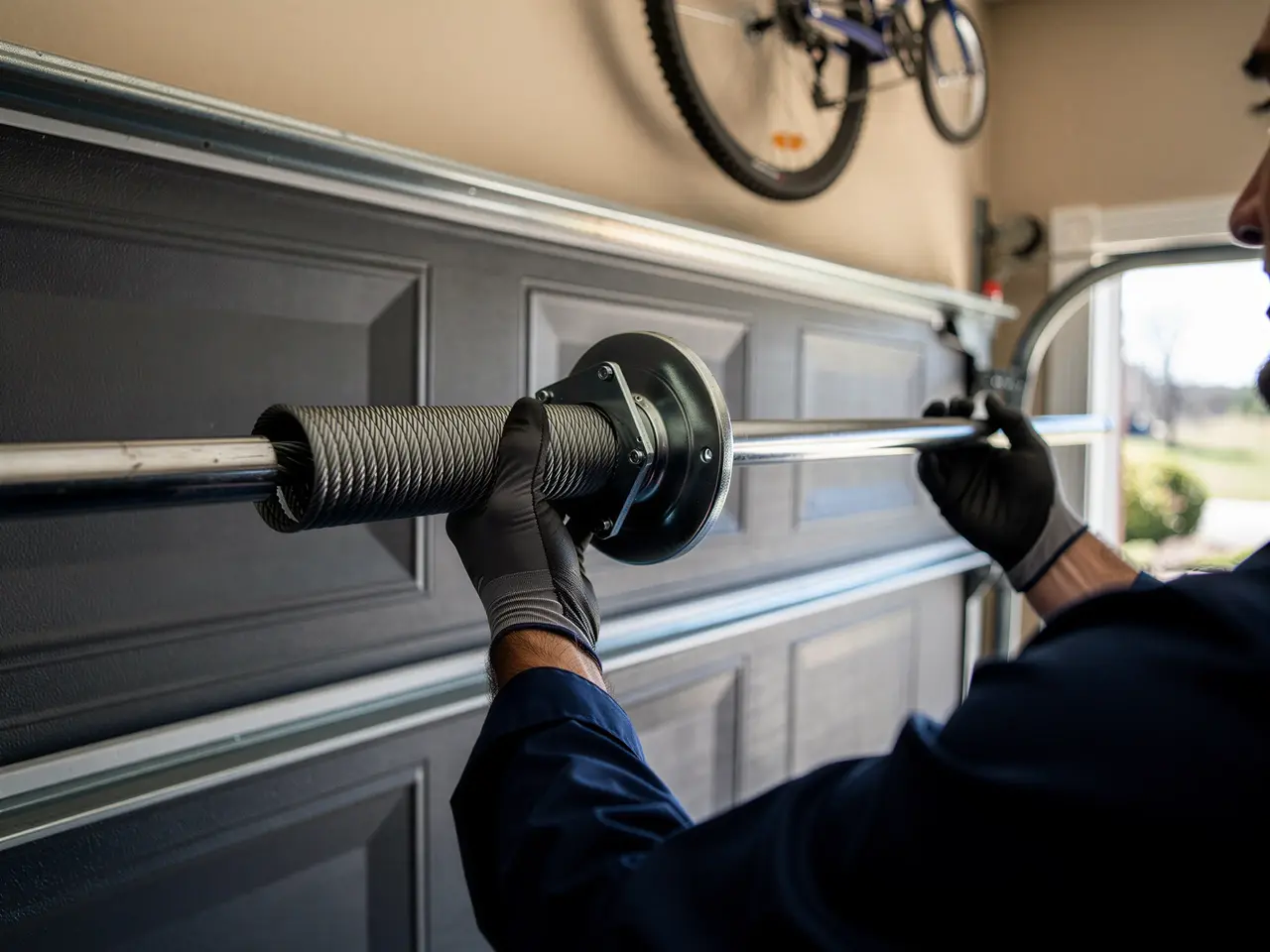
Terrytown's housing stock centers on 1977, which puts it squarely inside the service area's broader 1958-1997 build window. That matters more than it sounds like it should, because a cable repair on a door from that era is a different job than one on a door built in 2005. The lift cable runs off a stamped steel drum sized to the original cable gauge, usually on a single-cable setup rather than the dual-cable, dual-drum arrangement that became common later. Fixing it right means matching that drum size, not grabbing a generic cable off the shelf and hoping it tracks straight.
The repair itself is straightforward for a crew that's done it: release tension on the spring, pull the frayed or snapped cable off the drum, measure for the replacement against the original gauge, re-seat it, and re-tension. What throws people off is assuming any aircraft cable from a hardware store will do. On a door this age, it usually won't sit right, and a cable that doesn't sit right is a cable that fails again inside a few months.
With 9,166 households in Terrytown, a good number of them are still running that original drum and spring combination, just with a cable that's been replaced once or twice along the way.
The DIY Question
A snapped cable under tension is not a weekend project, and we'll say that plainly: the spring holding that door up stores enough force to do real damage if it lets go while you're working near it. That's the honest limitation here. We're not going to walk you through releasing torsion-spring tension over the phone, and any guide that tells you it's a simple bolt-and-cable swap is leaving out the part where people get hurt.
What you can do yourself is diagnose. If the door hangs crooked, if one side drops faster than the other when you open it, or if you can see frayed strands near the bottom bracket, that's a cable problem, not an opener problem. Snap a photo before you call. It saves time on-site.
At a median household income of $56,944, we see plenty of owners choose a cable splice or single-cable swap over a full door replacement when the drum, track, and spring are still sound. That's usually the right call on a door from this era, as long as the rest of the hardware hasn't given out too.
Where This Job Goes Sideways
The most common mistake on a Terrytown-era door is mismatching the cable to the drum. These doors were built with a specific drum groove pitch, and a cable that's slightly off gauge will ride up and over the groove instead of sitting in it. It looks fine for a week or two, then it walks off the drum entirely and the door drops on one side.
The second place this goes wrong is tension. On a single-cable, single-drum setup, both sides of the door have to come up even, and that only happens if the spring tension is set correctly relative to the new cable length. Get that wrong and the door will rack sideways in the track, which chews up rollers fast.
Third, and this is the one that costs people money: treating a frayed cable as the whole problem when it's really a symptom. A cable that frays prematurely on a door this age is often a sign the drum itself is worn or the bottom bracket has shifted. Replace just the cable and you're back out again in a few months.
Why This Fails Locally
Terrytown sits about 12 miles from New Orleans, and the housing that went up here falls into the same general climate band as the rest of the service area: mild most of the year with occasional freeze events. That combination of heat, humidity, and the odd cold snap is hard on exposed steel cable over four and five decades. Galvanized coating wears thin, moisture gets into the strands, and a cable that looks intact can be most of the way to failure underneath.
On a door built around 1977, that cable has likely been replaced at least once already, sometimes with parts that didn't match the original drum spec. Layer enough of those mismatched repairs on top of each other and the setup gets unpredictable: tension that was fine for one cable size is wrong for another, and the door starts behaving differently season to season.
It's not a dramatic failure mode. It's slow wear on original-era hardware, in a climate that doesn't give steel a break, on houses that are now pushing fifty years old.
How It Shows Up
Usually it starts small. The door opens unevenly, dipping on one side before leveling out. Sometimes you'll hear a popping or snapping sound when the door is partway up or down, which is the cable catching or slipping on the drum rather than running smooth. Visible fraying near the bottom bracket is the clearest sign, if you can see it safely without putting your hands near the cable or spring.
In the worst case, the cable snaps outright while the door is moving, and the door either drops hard or jams at an angle in the track. On a door built to 1970s hardware specs, that drop can also bend the track or crack an older, more brittle panel, which turns a cable job into a bigger repair.
If the opener strains, reverses unexpectedly, or the door feels heavier than it used to on manual lift, that's often the cable and spring system compensating for wear before it actually fails. Catching it at that stage is cheaper and safer than waiting for the snap.
How Long You Are Without the Door
A straightforward cable replacement on a single-drum setup, once the technician is on-site with the right size cable for the drum, doesn't take long to actually perform. The time that adds up is getting the right part out to Terrytown in the first place, since the crew works out of New Orleans and brings parts based on what the job needs, not off a local shelf.
If the cable is a standard match for the drum, the door is usually back in service the same visit. If the drum itself is worn or the bracket needs replacing too, that can mean a second trip once the part is in hand. We'd rather tell you that up front than promise a same-visit fix and miss it.
In the meantime, the honest move is to leave the door down and not run the opener. A door hanging on one working cable can slip the rest of the way off the drum, and that turns a repair into a bigger one.
Frequently asked questions
Why does the age of my house matter for a cable repair?
Houses in Terrytown mostly date to around 1977, and doors from that era use a specific drum size and cable gauge. A generic replacement cable often doesn't match the groove pitch, so it rides off the drum instead of staying seated. Matching the original spec is what keeps the repair from failing again in a few months.
Can I replace just the cable, or do I need a new door?
If the drum, track, and spring are still in good shape, a cable replacement or splice is usually enough. We only recommend going further when the drum is worn or the bracket has shifted, since replacing the cable alone won't fix those underlying issues.
Is a snapped cable safe to deal with myself?
No. The spring holding the door up stores enough tension to cause serious injury if it releases while you're working near it. Diagnosing the problem yourself is fine, but the actual cable swap and re-tensioning should go to someone who does this work regularly.
How fast can someone get to Terrytown?
The crew travels from New Orleans, about 12 miles out, and brings parts based on what the call describes. We don't promise a set response window here, but we do plan the parts for the job before heading out so the visit counts.
More garage door services in Terrytown
Book garage door service in New Orleans
Call now or request a quote - tell us what the door is doing and where you are.