New Orleans, LA · Garage Door Service
What That Garage Door Noise Is Actually Telling You
Grinding, popping, or slamming garage door in New Orleans? Learn what each sound means for the 1958-1997 housing stock common across the area.
- Repairs & new doors
- Springs & openers
- Serving 7 nearby communities
What Is Going On
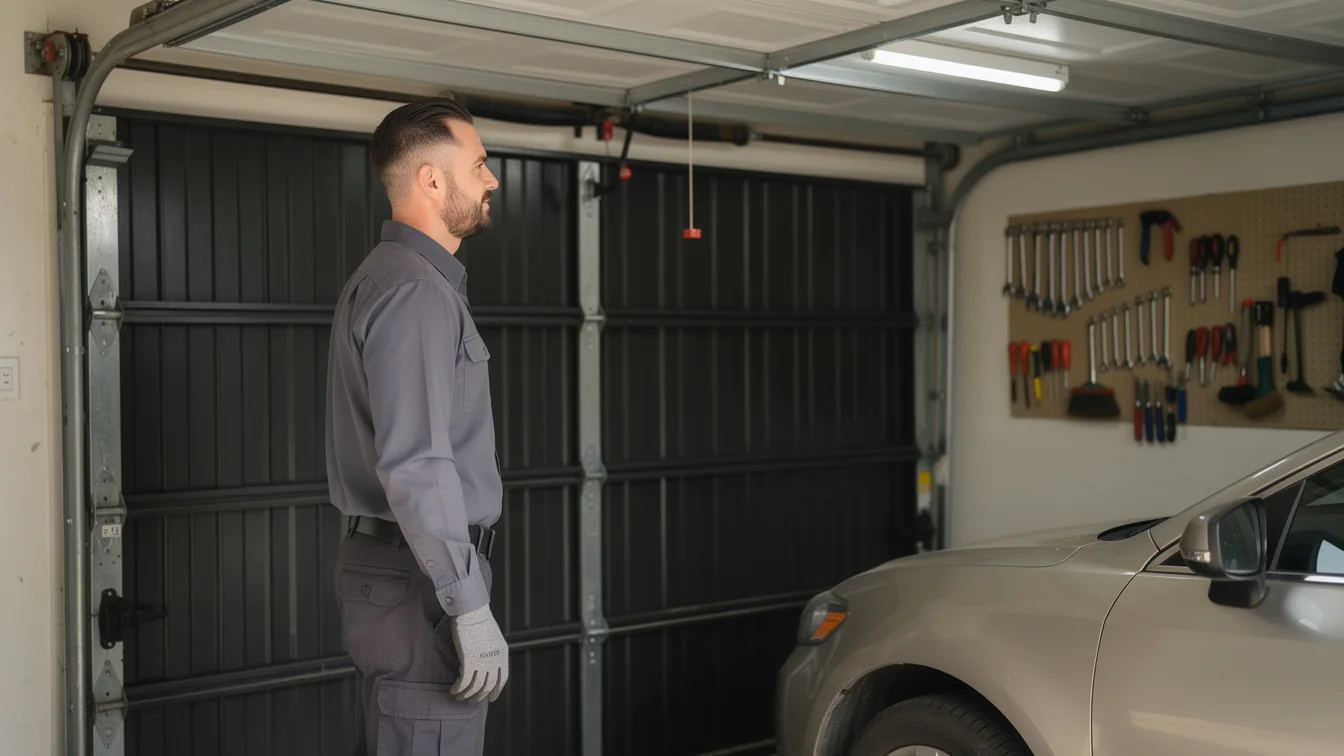
Most of the houses we get called to in this service area went up somewhere between 1958 and 1997, with the median landing around 1977. That means a lot of original or first-replacement hardware - torsion springs, rollers, and track that have been doing their job quietly for decades, right up until they aren't quiet anymore. A grinding sound usually means a roller with a flat spot or a bearing that's worn through its grease. A sharp bang, especially right as the door starts moving, is almost always a torsion spring letting go - common on doors from this build era because the springs were never rated for a second decade of daily cycles, let alone four. A rattling track is loose bolts, which on a house this age have usually backed out from years of vibration and never been re-torqued. None of these noises are random. Each one points to a specific part, and on a door built or installed in the 60s or 70s, that part has usually earned its failure honestly.
We won't pretend every noise needs a truck roll. Sometimes it's a dry hinge and a can of the right lubricant fixes it in five minutes. But if you're hearing metal-on-metal grinding or a loud pop, that's not a lubrication problem - that's a part telling you it's done.
What Local Conditions Do
The service area runs mild with occasional freezes, not the deep-freeze cycles that crack steel up north, but enough cold snaps to matter. Metal contracts a little on those colder nights, grease stiffens, and rollers that were already worn start catching instead of rolling. That's when a door that's been limping along all fall suddenly starts groaning every time it opens.
Across the 24 named areas we work in - from Chalmette and Arabi in the east to Marrero and Westwego on the west bank - the housing stock skews the same way: 60s and 70s construction, meaning garages built before modern opener safety standards and often retrofitted with a newer opener bolted onto old track. That mismatch is its own noise source. The opener motor is doing more work than the track geometry was built for, and you hear it as a strained hum or a door that shudders partway up. It's not a wiring problem. It's an old track carrying a load it wasn't designed around.
The Seasonal Bit
With a median build year of 1977, a lot of these doors are on their second or third opener but still riding the original track and hinges. The mild-with-some-freeze pattern here doesn't cause the dramatic ice-jam failures you'd see in a harder winter climate, but it does mean lubricant breaks down and reapplies unevenly across the year - thick and sluggish on the rare cold mornings, thin and runny once the heat comes back. That cycle accelerates wear on parts that were already pushing 40 or 50 years old.
We see the same complaint a lot this time of year: a door that was fine all summer starts squeaking or catching on the first cool mornings. It's not new damage. It's old wear finally showing itself because the grease stopped masking it. If your door has been quiet for years and suddenly isn't, the parts didn't change - the temperature did, and it just exposed what was already there.
When to Call Someone
Call if you hear a loud bang, a grinding roller, or a door that shudders and strains partway through its cycle - those are spring, roller, and track problems, and they get worse, not better, if you keep running the door. Don't call just because a hinge squeaks once; try a drop of lubricant first and see if it holds for a week.
Here's the honest limit: if your door and opener are both original to a house built in the 1960s or 70s, a repair sometimes just delays a replacement you'll need in a year or two anyway. We'll tell you straight when that's the case instead of patching the same worn track three times. For households across this area - median income around $58,255 - that's a real cost decision, not just a repair one, and we'd rather you make it with the full picture.
Frequently asked questions
Why does my garage door only make noise in the morning?
Cooler overnight temperatures stiffen old grease and contract metal slightly, which is enough to make a worn roller or hinge catch when it didn't during the warmer part of the day. Once the door's been run a few times and things warm up, the noise often fades - but the wear causing it doesn't go away on its own.
Is a loud bang always a broken spring?
In houses from this area's common 1960s-70s construction era, a sudden bang right as the door starts moving is almost always a torsion spring breaking. It's loud, it's startling, and it means the door shouldn't be opened again until the spring is replaced - the opener can't safely lift the door's full weight without it.
My opener hums but the door barely moves. What's that?
That's usually an opener working harder than the track and hardware were built to handle, common when a newer opener gets installed on original track from a house's first build decades ago. It's a mismatch problem, not necessarily a motor failure, and it's worth having someone check the track and rollers before replacing the opener.
Related garage door services in New Orleans
More garage door guides
Book garage door service in New Orleans
Call now or request a quote - tell us what the door is doing and where you are.