
New Orleans, LA · Garage Door Service
Weather Seals and Drafts on New Orleans Garage Doors
Why older New Orleans garage doors leak air at the bottom and sides, how the local mild-with-freeze climate wears out seals, and when to replace rather than patch them.
- Repairs & new doors
- Springs & openers
- Serving 7 nearby communities
What Is Going On
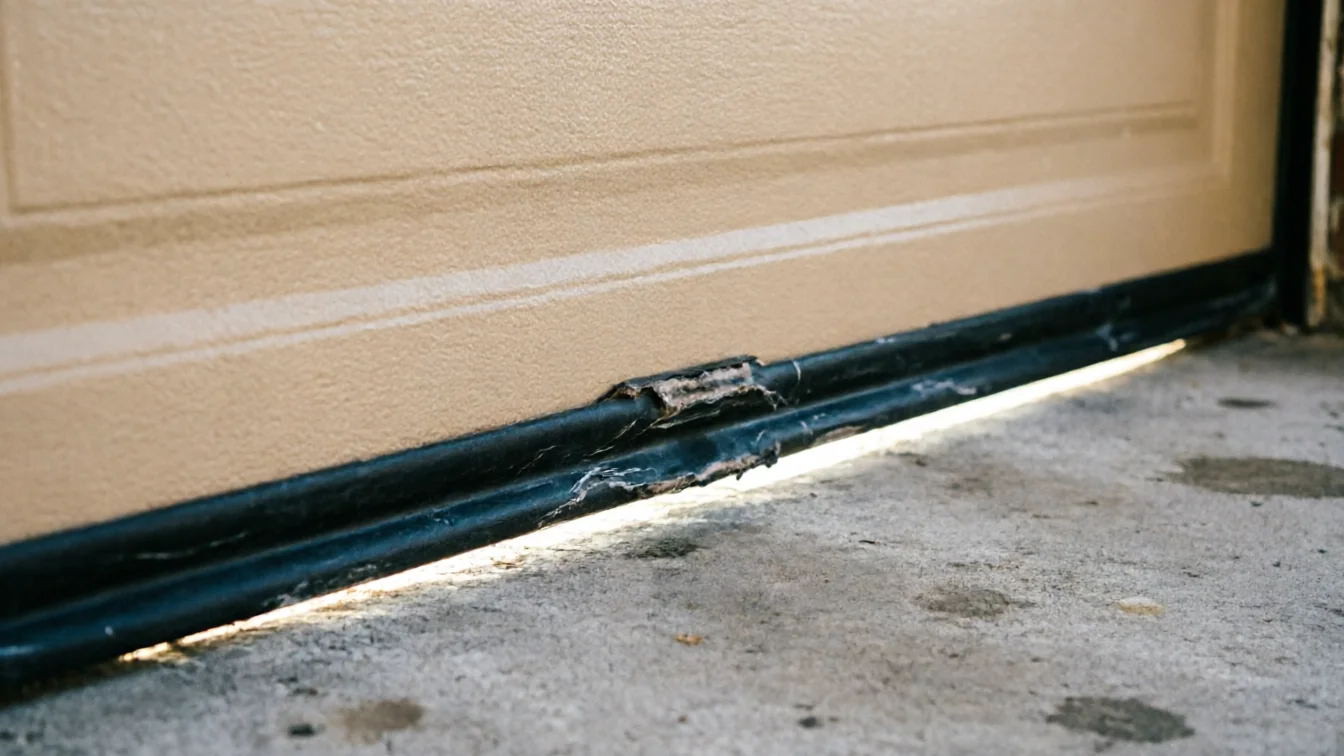
If you feel air moving under your garage door on a still day, the seal isn't doing its job anymore. That's not unusual here. Most of the housing stock across this service area went up between 1958 and 1997, with the typical house dating to 1977, and across the 24 communities we track - from Chalmette and Arabi out to Kenner and Westwego - the bulk of that building happened in the 1960s and 70s. A bottom seal and side weatherstripping installed on a door from that era is long past any reasonable service life, rubber or vinyl both. Decades of sun, slab settling, and ordinary opening and closing wear the material thin or pull it loose from the track. You see the gap as a shadow line under the door during the day and feel it as a draft at night. On a lot of these older doors the seal retainer itself is an odd-width aluminum channel that newer stock seal doesn't fit, which is part of why a quick trip to a hardware store rarely fixes it for good. The fix has to match the door, not just the generic kit on the shelf.
What Local Conditions Do
This area sits in a climate band that's mild most of the year but still sees occasional freezes, and that combination is harder on a seal than straight heat or straight cold would be. A seal that sits soft and pliable through most of the year gets one or two hard cold mornings a winter where it stiffens fast, and a stiff seal doesn't flex back against the slab the way it needs to. On a door built in the 1960s or 70s stock common across this area, that seal has already lost most of its elasticity from age and sun exposure, so the cold morning is just the final push that separates it from the floor. That's different from a seal in a climate that's cold all winter, where the material is bred for cold and conditioned to it. Here it swings, and the swing is what tears it up. Owners in Chalmette, Arabi, and the rest of the near communities on the same build-era housing see the identical pattern - it isn't a downtown-only issue, it follows the age of the door, not the zip code.
The Seasonal Bit
Because hard freezes are rare in this climate band, most owners don't think about their seal until one actually hits. By then the bottom seal on a door built anywhere in that 1958-1997 window has usually already cracked, dried, or pulled free of the retainer, and the cold morning just makes it obvious - you'll hear wind whistle at the corners or see daylight under the panel. The seasonal pattern here isn't about a long cold stretch wearing a seal down gradually. It's a handful of cold mornings a year landing on seals that were already brittle from age and sun, and the sudden temperature drop finishes the job. Side seals go the same way, usually a year or two after the bottom one, because they take the same sun and age but less direct wear. If your door is original to a house built in that mid-century to late-century stretch, the seal is operating on borrowed time whether or not this winter brings a freeze at all. A fresh bottom seal and side weatherstrip is one of the few repairs on a garage door that pays for itself fast - it's cheap, it's fast to install, and it stops the draft at the source instead of papering over it with foam tape.
When to Call Someone
Call if you can see daylight under the door, feel air moving around the frame, or notice the bottom seal has gone flat and brittle instead of round and springy. We can usually replace a bottom seal and side weatherstrip in one visit without touching the opener or springs. The honest limitation: if the track or the door panel itself has warped from age - which happens on some of the older 1960s and 70s doors in this area - a new seal won't seat right no matter how good the install is, and we'll tell you that instead of selling you a seal that won't hold. In that case the conversation shifts to whether the door itself is worth keeping. We work this service area out to places like Belle Chasse, Marrero, and Kenner, and the same housing-age pattern holds across most of it, so the diagnosis rarely changes much by location - it changes by how old the door actually is.
Frequently asked questions
Why does my garage door only draft on cold mornings?
Your seal is likely original or close to it, and seals on older doors lose flexibility from age and sun before they lose it from cold. Most of the year the material is soft enough to hide the wear. A cold morning stiffens it just enough to pull away from the slab, which is when you finally feel the draft you've actually had for a while.
Will a new seal fix a door built in the 1960s or 70s?
Usually yes, if the track and panel are still straight. The seal retainer on older doors can be an odd width, so the part has to match the door rather than come off a generic rack. If the panel has warped, a new seal alone won't seal it and that's worth knowing before you pay for one.
How often should I expect to replace a bottom seal here?
We don't have a fixed interval to give you, since it depends on sun exposure and how the door sits on the slab. What we can say is that a seal installed decades ago, on housing from the 1958-1997 era common in this area, is well past useful life regardless of the exact year.
Related garage door services in New Orleans
More garage door guides
Book garage door service in New Orleans
Call now or request a quote - tell us what the door is doing and where you are.