New Orleans, LA · Garage Door Service
What Happens to a Garage Door Spring When New Orleans Gets a Cold Night
A cold snap after weeks of Gulf humidity can snap an aging torsion spring fast. See why New Orleans homes built 1958-1997 are most at risk, and what to do.
- Repairs & new doors
- Springs & openers
- Serving 7 nearby communities
What Is Going On
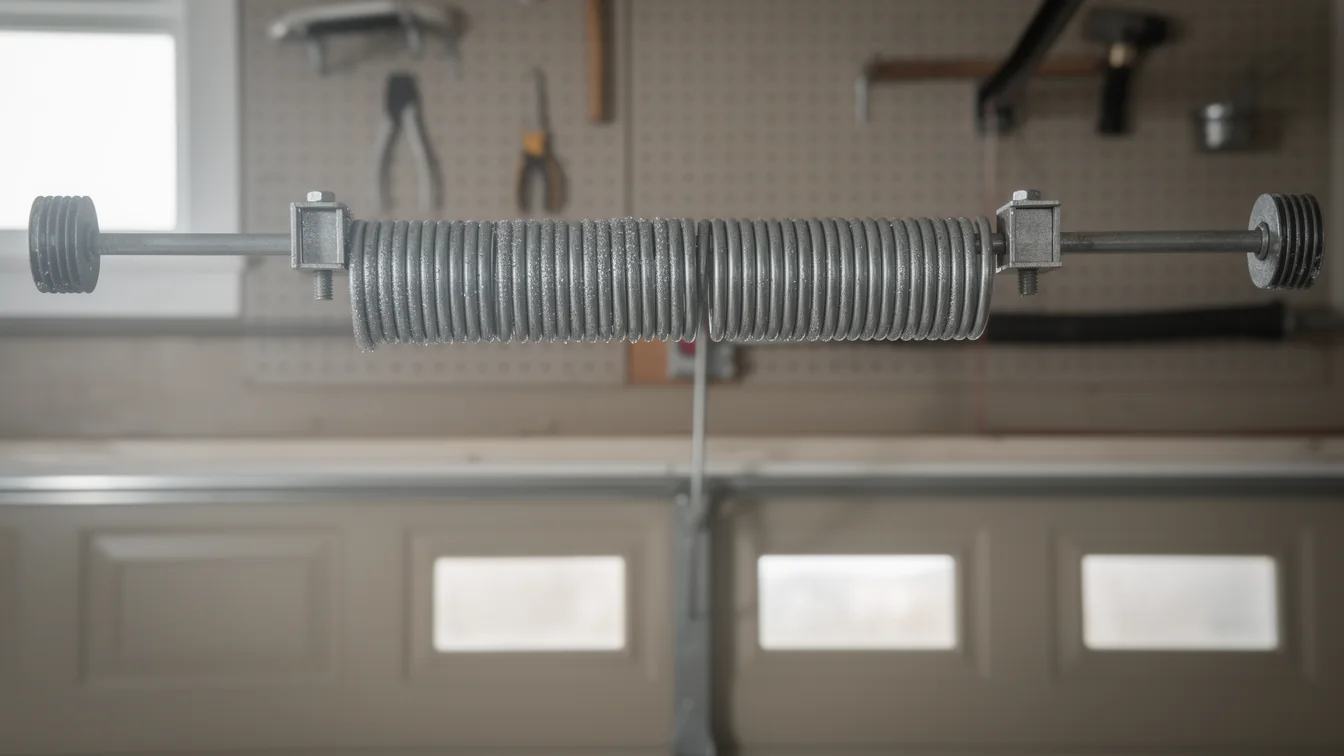
Most of the houses we work on in this service area went up between 1958 and 1997, with the median around 1977. That means a lot of original torsion springs, or at best a second set installed sometime in the 90s, holding up doors across the 24 named areas we cover, from Chalmette and Arabi out to Westwego and Avondale. A torsion spring is rated for a number of open-close cycles, not a number of years, but age still matters because the wire fatigues and the galvanized coating thins. In a spring that old, it doesn't take much of a shock to finish the job. The call we get isn't usually "my spring broke on a freezing morning" out of nowhere - it's a spring that was already close to the end, and a cold night was the thing that tipped it over. Homeowners in the older sections of this area, where doors have been swapped once or never, are the ones who see this most.
What Local Conditions Do
This area sits in a mild climate band with occasional freezes, not a true hard-winter zone. That matters for how a spring fails here compared to up north. Steel contracts when it gets cold, and a spring that's spent years expanding and relaxing in heat and humidity doesn't have much give left when a freeze hits. It's not the cold alone doing the damage - it's cold arriving on top of a spring that's already corroded a little from the humidity this area holds most of the year. Galvanized coating resists rust, but it doesn't last forever in this kind of air, and once rust gets under the coil, cold makes the metal more brittle than it would be on a mild morning. We see more spring failures cluster on the handful of nights each winter when the temperature actually drops, compared to the rest of the year, which tells you the freeze is the trigger even if the humidity did the slow damage.
The Seasonal Bit
A cold front coming through means a window of a day or two where overnight temperatures actually dip below where this area normally sits. That's the window where we get more calls for a spring that let go first thing in the morning - the door won't lift, or it drops hard and fast when someone tries. It's not every house and it's not every door. It's the ones with a spring that was already fatigued from twenty, thirty, forty years of cycles in a house built back in the 1958-1997 stretch that makes up most of this area's housing. If your door has never had the springs replaced and the house is from that era, a hard freeze night is exactly when the weak point shows itself. Outside those cold snaps, this area doesn't ask much of a spring - it's the combination of old age and one sharp temperature drop that does it.
When to Call Someone
If a spring snaps, don't try to force the door open or closed - a broken torsion spring under tension is a real hazard, not a minor fix. Call and we'll come look at it. One honest limitation: if your door is an older size or an unusual width, we sometimes have to order the exact spring rather than pull it off the truck, so a same-day fix isn't always possible on the first visit. We work across this service area - 66,523 owner-occupied houses sit within it, alongside renters, and median household income here runs around $58,255, which is part of why we try to tell people straight when a repair makes sense and when it doesn't. A spring on a 1970s door with original hardware everywhere else is usually worth fixing. A door that's failing in three other ways at once is a different conversation.
Frequently asked questions
Why did my spring break on the one cold night we had this year?
Because the spring was already old, not because the cold alone broke it. Most houses in this area were built between 1958 and 1997, so a lot of springs are decades past new. A hard freeze night adds just enough stress to a fatigued spring to finish it off. The humidity most of the year has already been working on the coating.
Does New Orleans get cold enough to actually affect garage door springs?
This area sits in a mild band with only occasional freezes, so it's not a constant issue the way it would be further north. But those few freeze nights each winter are when we see spring failures cluster, because steel contracts and gets more brittle right when an old spring has the least give left in it.
Can I replace a broken torsion spring myself?
We'd rather you didn't. A torsion spring is under heavy tension and letting it go wrong can cause a serious injury. Call and we'll bring the right spring for your door - on older or unusual sizes we sometimes need to order the part, so it isn't always a same-visit fix.
Is my whole door at risk if one spring breaks?
Not usually. A broken spring just means the door has lost its counterbalance - the opener and track are often fine. On older doors, though, a snapped spring sometimes reveals worn rollers or a cable that was due anyway, so we check the whole system while we're there rather than just swap the spring.
Related garage door services in New Orleans
More garage door guides
Book garage door service in New Orleans
Call now or request a quote - tell us what the door is doing and where you are.