
New Orleans, LA · Garage Door Service
Why Your Garage Door Jumps the Track
New Orleans homes built mostly 1958-1997 have original track hardware fighting decades of humidity. Here's why doors jump the track and what actually fixes it.
- Repairs & new doors
- Springs & openers
- Serving 7 nearby communities
What Is Going On
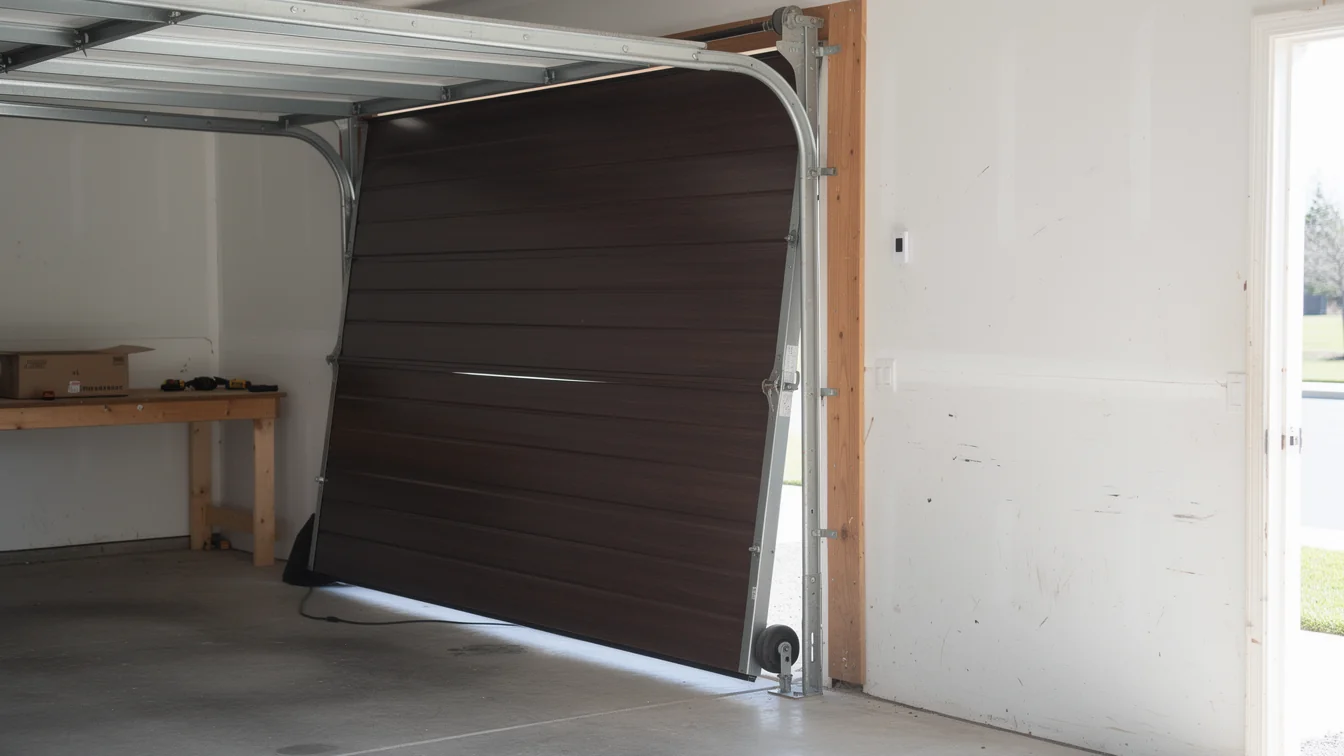
A door off track almost never happens on its own. One roller catches a bent section of rail, or a bracket that's worked loose pulls the track a quarter-inch out of line, and the next time the door runs, a wheel pops free of the channel. From there the panel either hangs crooked or won't move at all.
In this area the starting point is usually the hardware itself. Housing here was built mostly between 1958 and 1997, with the median landing around 1977, and that means a lot of garage doors are still riding on the original steel track and brackets installed when the house went up. Forty to sixty years is a long run for anything bolted to a house, and track brackets are no exception. The lag screws back out of the jamb a little at a time, the track flexes under the door's weight, and eventually a roller finds the gap.
This isn't a defect in any one door. It's what happens to mid-century and late-century garage hardware that's never been swapped out, which describes a lot of the stock we see across this part of the city.
What Local Conditions Do
New Orleans sits in a mild climate band with only occasional freeze, so we're not dealing with the hard winter contraction that cracks hardware up north. What we get instead is sustained humidity, and that works on steel in its own way - surface rust on track bolts, corrosion inside the bracket where it meets the wood jamb, and slow swelling of the wood itself around the anchor points.
On houses built in the 1960s and 70s, which make up most of the stock across the named areas we work in - from Chalmette and Arabi out to Gretna and Westwego - that wood-and-steel connection has had decades to loosen. A bracket that's rusted at the screw holes doesn't fail all at once. It gives a little more each time the door runs, until one day the track shifts just enough for a roller to jump it.
We don't treat this as random bad luck. It's the predictable result of original hardware meeting this specific combination of age and moisture, which is why the same failure shows up house after house on the same blocks.
The Seasonal Bit
Because the freeze here is occasional rather than routine, we don't see the track problems that come from ice locking a door shut or metal snapping from cold shrink. What we see instead tracks with humidity swings - stretches of heavy moisture followed by drier spells that make wood framing expand and contract around the brackets holding the track in place.
That cycle is slower than a hard freeze-thaw, but it's constant, and on a house from the 1958-1997 build window it's had a long time to work. A bracket that held tight for thirty years can come loose in a single wet season once the wood around the screws has softened enough.
We also see more off-track calls after long stretches of high humidity than after any cold snap, which matches what the climate data says about this area - mild with only some freeze risk, but humid enough to matter to steel and wood connections year-round. If your door has started running rough only in the last year or two, that gradual moisture cycle on aging hardware is usually the reason, not any one storm or cold front.
When to Call Someone
If a roller has popped out of the track but the door is still roughly square in the opening, that's often a bracket tightening and realignment job - straightforward, and usually done in one visit. If the track itself is bent more than an inch or two out of true, realignment won't hold; the section needs to come out and get replaced, because bent steel doesn't bend back reliably.
Here's the limitation worth knowing: we can't always tell which one it is without seeing the door in person. A door that looks slightly crooked from the driveway can have a track that's fine and a bracket that's shot, or the reverse, and guessing wrong means a callback.
Don't keep running the opener once a door is visibly off track. Forcing it usually bends the track further or pulls the next bracket loose, turning a small fix into a track replacement. Pull the release handle, move the door by hand if you can, and leave it until someone looks at the hardware.
Frequently asked questions
Why does my garage door only jump the track in certain weather?
On houses from this area's typical 1958-1997 build range, the wood framing around the track brackets expands and contracts with humidity swings rather than cold. A bracket that's been loosening for years can finally give during a wet stretch, which is why off-track calls often cluster after long humid spells rather than after a cold front.
Can I just push the door back onto the track myself?
If a roller has only partly slipped and the track isn't bent, some homeowners can ease it back by hand with the opener disconnected. But if the track is bent or a bracket has pulled loose from the jamb, forcing the door back on usually makes the damage worse. It's worth having it looked at before running the opener again.
Is it the spring or the track when the door won't move?
A door that's off track usually binds unevenly and you can see the gap where the roller left the channel. A spring problem usually looks different - the door feels heavy, drops fast, or won't lift at all, with the track itself still straight. They're separate failures, though an old door can have both.
Related garage door services in New Orleans
More garage door guides
Book garage door service in New Orleans
Call now or request a quote - tell us what the door is doing and where you are.