
New Orleans, LA · Garage Door Service
Opener Repair for Gretna's 1960s Garage Doors
Gretna's garage doors date mostly to the mid-1960s, built before chain-drive openers existed. We travel from New Orleans to fix the retrofit wiring and worn gears that come with that mismatch.
- Repairs & new doors
- Springs & openers
- Serving 7 nearby communities
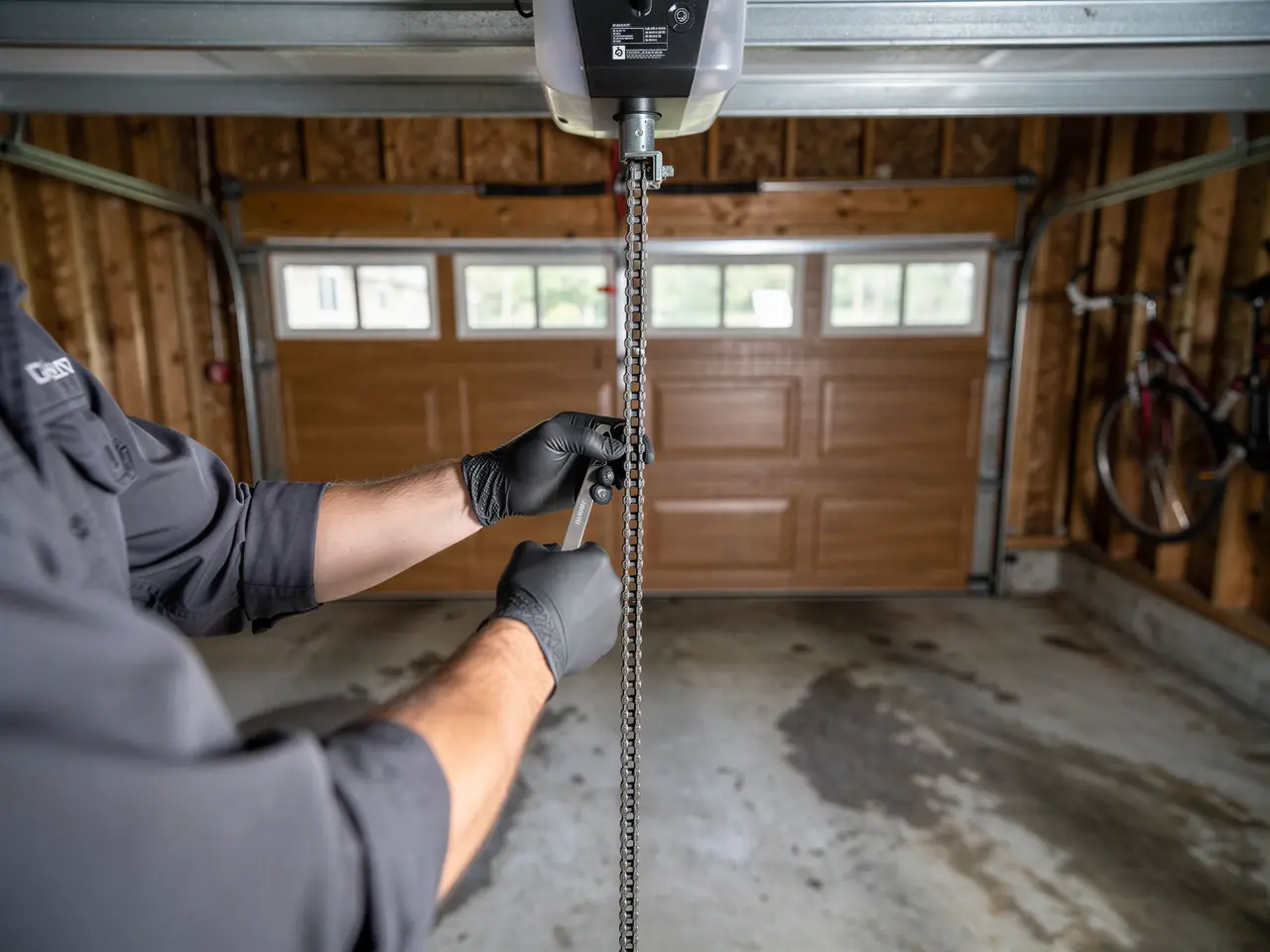
Booking a Visit
We run this call out of New Orleans, about 12 miles up the road, so we ask a few questions before the truck rolls: the age of the house if you know it, whether the opener is chain, belt, or screw drive, and whether the door itself is original or has been swapped out. Most Gretna houses on this side of the river went up in the mid-1960s, and that one fact changes what we bring. A door built in 1966 almost never came with a powered opener from the factory - openers got bolted onto these doors later, sometimes decades later, by whoever owned the house at the time. That means the bracket, the header mount, and the wiring run are often a patch job on top of a patch job, and we want to know that before we're standing in the driveway. Tell us what you've got and we'll tell you what we expect to find.
We don't keep a branch in Gretna - we come from New Orleans on scheduled visits, not standing dispatch, so same-day isn't something we promise here. What we do promise is that the tech who shows up has already thought through what a 1966-era door frame does to opener hardware, instead of guessing on-site.
Why This Fails Locally
Houses in this part of Gretna were mostly built in the 1960s and 70s, years before the household here had central, powered garage doors as a standard feature. What that means in practice: the door is heavier and simpler than a modern insulated panel, and the opener bolted to it afterward was sized for a lighter door that didn't exist yet when the house was framed. Over time the opener works harder than it should, the drive gear wears faster, and the travel limits drift because the header it's mounted to was never built to spec for a motor.
Add the climate here - mild most of the year with occasional freezes - and you get metal brackets and chain tension that expand and contract just enough, year over year, to loosen screws and throw off calibration. It's not dramatic weather damage. It's small movement repeated for fifty-some years on hardware that was never matched to the door in the first place. That mismatch, more than the opener's age, is why so many of these units fail in the same handful of ways.
The DIY Question
If the opener hums but the door doesn't move, that's usually the drive gear - a part you can replace yourself if you're comfortable pulling the housing apart and the model is still supported. If the door reverses halfway up for no reason, that's travel limits or a safety sensor out of alignment, and that one is worth doing yourself with the manual in hand; it's rarely a part, just a setting.
What we don't recommend DIY-ing on a house of this era: rewiring or remounting the opener bracket itself. On a lot of these houses the header the opener hangs from wasn't engineered for the load, and a bracket that's been re-drilled once or twice already doesn't give you much margin for a third try. If the mount is cracked, split, or visibly sagging, that's a call, not a weekend project. We'll say plainly that if the opener is original to a 1990s install and the gear kit costs nearly what a new unit runs, replacement is the better math - we'll tell you that instead of selling you a repair that doesn't make sense.
How It Shows Up
The most common call we get from this stretch is an opener that runs but the door barely lifts, or lifts a few inches and stalls - that's a motor straining against a door and spring setup it was never sized for. Next most common: a door that opens fine but closes on its own schedule, somewhere between four and ten feet from the floor, which is almost always a misaligned safety sensor or a limit switch that's drifted from decades of seasonal metal movement.
Less often, but regularly enough to mention, we get a dead opener with no sound at all - a tripped breaker or a burnt capacitor, more common on units installed as a retrofit where the circuit wasn't run cleanly to begin with. Given how many Gretna garages carry openers added well after the house was built, we check the wiring run as a first step, not an afterthought.
What Is on the Truck
For this kind of call we carry drive gear kits for chain and belt openers, replacement logic boards for the common brands still running on original or first-replacement units, limit switches, safety sensor pairs, and capacitors. We also carry remounting hardware sized for older headers, since a lot of these brackets have been drilled more than once over the years and need a cleaner anchor point rather than another hole in the same spot.
What we don't carry, honestly, is a stock of parts for openers that have been discontinued for a long time - if your unit is old enough that the manufacturer no longer makes the gear or the board, we'll say so on-site rather than order a part that may take weeks, and we'll give you the honest comparison between waiting on that part and replacing the opener outright.
Frequently asked questions
Why does my opener strain on a door that's not that heavy?
A lot of Gretna garages were built in the mid-1960s, before powered openers were standard. The opener was added later and sized for a lighter, more modern door than the one actually on the track, so it works harder than it should from day one.
Do you have a crew based in Gretna?
No. We run out of New Orleans, about 12 miles away, and come out on scheduled visits rather than standing dispatch in town. We'll tell you a realistic window when you call rather than promise same-day.
Is it worth repairing an opener installed as a retrofit decades ago?
Sometimes. If the gear or board is still made, repair usually makes sense. If the unit is old enough that parts are discontinued, we'll say so and walk you through replacement costs instead of chasing a part that may take weeks to source.
Why does my door close partway and then reverse?
That's almost always a safety sensor or limit switch out of alignment, often from years of small seasonal metal movement in our mild, occasional-freeze climate. It's a quick fix in most cases, not a sign of a bigger problem.
Book garage door service in New Orleans
Call now or request a quote - tell us what the door is doing and where you are.